
Field service proof of work is structured job evidence showing what happened, who completed it, what proof was captured, and what remains open.
Field service proof of work is structured evidence that shows what happened on a field job, who completed it, what proof was captured, what exceptions remain, and whether the job is ready for review.
It is not just a photo gallery or a signed work order. A useful proof-of-work record connects workflow steps, required photos, timestamps, technician notes, readings, measurements, exceptions, signoff, and reviewer context so a supervisor, customer, warranty team, quality reviewer, or auditor can understand the job without reconstructing it after the technician leaves.
Why proof of work matters in field service
Field service work happens away from the office, away from the supervisor, and often away from the person who later has to explain the outcome. A technician may do excellent work, but if the proof is incomplete, the review process can still fail. Photos may live in a camera roll. Notes may be buried in a work order. Exceptions may be mentioned in a text thread. A customer may ask what was done. A warranty reviewer may need before and after evidence. Operations may need to know whether a repeat issue came from missing proof, unclear steps, or a real service problem.
Proof of work gives the job a structured record. It helps the organization move from "the technician said it was done" to "the completed workflow, evidence, exceptions, and review path are visible." That distinction matters for supervisor review, customer handoff, warranty documentation, subcontractor accountability, callback analysis, and pilot readiness for AI-guided workflows.
The job is finished before review begins
Most evidence problems show up after the truck has rolled away. Proof captured at the source reduces after-the-fact reconstruction.
Reviewers need context, not just files
A photo is stronger when it is tied to the step, asset, timestamp, note, exception, and closeout status.
Closeout needs to be explainable
Customers, warranty teams, and internal reviewers need a record that makes completed work and open items easy to understand.
What proof of work is not
Proof of work is often confused with basic documentation. That confusion causes weak records. A work order can show that a job existed. A photo can show a condition. A note can explain a technician observation. A signature can show acknowledgment where configured. But none of those items automatically prove the workflow was followed or make the job easy to review.
Proof of work is also not a replacement for technician judgment, supervisor review, safety procedures, warranty terms, code requirements, legal review, or a field service management system. It supports those processes by making the evidence clearer. It should document what was captured and what needs review, not overclaim that something was approved, compliant, warrantable, or guaranteed.
| Common artifact | What it can show | What it may miss |
|---|---|---|
| Completed work order | A job was assigned, updated, and closed in a system. | Step-level proof, exception context, and reviewer-ready evidence. |
| Photo upload | A visual condition or completed work detail. | Why the photo matters, when it was captured, and what step it supports. |
| Freeform note | A technician observation or explanation. | Consistency, required proof, structured closeout, and reviewer ownership. |
| Signature | A signoff event where configured. | Whether required proof, exceptions, and closeout details were complete. |
Completed work order vs. proof-of-work record
The dispatch or FSM record may say the job is done, but reviewers may still need evidence.
The record shows which workflow steps were completed, skipped, blocked, or escalated.
Photos, readings, measurements, notes, timestamps, and signoff are tied to the right step.
Missing proof, unresolved conditions, access issues, customer questions, or follow-up needs stay visible.
The record names who needs to review it and what action is expected next.
What a complete proof-of-work record includes
The exact evidence depends on the workflow. A utility contractor verification workflow is not the same as HVAC PM closeout, and a roofing storm documentation workflow is not the same as warranty repair. Still, most strong proof-of-work records include the same core building blocks.
- 1Job context
Customer, site, asset, work order, crew, contractor, location, or system reference.
- 2Workflow steps
The steps that were completed, blocked, skipped, escalated, or left open.
- 3Required proof
Photos, readings, measurements, timestamps, material notes, part notes, or signoff tied to each step.
- 4Technician notes
Short explanations that clarify condition, action, rationale, or field constraint.
- 5Exceptions
Open issues, missing proof, safety-sensitive notes, access blockers, customer questions, or follow-up needs.
- 6Review status
Supervisor, customer, warranty, quality, audit, or operations review path.
- 7Closeout summary
A concise record of what happened, what proof supports it, and what remains open.
Who uses proof of work after the job?
Proof of work is most valuable after the field step is complete. That is when other stakeholders need to review, explain, approve internally, export, or hand off the record. A good proof record should be understandable by people who were not physically present on site.
Supervisors need completed steps, required proof, exceptions, and follow-up ownership.
Customers need a simple closeout story with visible evidence and open-item clarity.
Warranty teams need before condition, repair action, after evidence, technician rationale, and reviewer notes.
Quality reviewers need consistency across steps, proof, notes, and exceptions.
Operations leaders need patterns around missing proof, repeat visits, and workflow friction.
System owners need export-ready metadata and a clean handoff path where configured.
Common proof gaps in field service
Proof gaps usually appear in the same places. The team has photos but not the step. It has notes but not the required evidence. It has a closeout status but not an exception path. It has signoff but not the context that explains what was signed off. These gaps are not always technician mistakes. They are often workflow design problems.
- Before photos are missing, unclear, or disconnected from the repair action.
- After photos exist, but reviewers cannot tell which step they support.
- Readings, measurements, parts, materials, or site conditions are captured inconsistently.
- Exceptions are written in freeform notes and disappear during closeout.
- Customer or technician signoff is captured without the supporting proof.
- Subcontractor work is difficult to verify because evidence is scattered.
- Warranty or quality review depends on memory instead of structured records.
- Supervisor review happens only after the job is closed and hard to reconstruct.
Proof of work by workflow
The best proof requirements come from the workflow, not from a generic upload rule. Different trades and field processes need different evidence standards. The pattern below is a practical starting point for mapping proof by workflow.
PM closeout
Nameplate photo, asset context, inspection step, condition photo, reading, exception note, and supervisor-ready summary.
Explore HVAC PM closeoutRepair closeout
Starting condition, repair action, before/after evidence, material or part note, and customer-ready closeout.
Explore plumbing proofCamera inspection proof
Inspection finding reference, condition note, recommendation, approval path, and closeout summary.
Explore camera inspection proofInspection documentation
Panel or asset context, required photo, reading where configured, safety-sensitive note, issue flag, and supervisor review path.
Explore electrical proofStorm damage documentation
Exterior area evidence, damage photos, measurements, material notes, access issues, and customer-ready closeout.
Explore roofing documentationInspection proof
Recurring check, site photo, contractor verification, safety note, exception status, and operations review trail.
Explore facilities proofAsset inspection
Asset condition, inspection step, contractor note, open issue, timestamp, and review-ready record.
Explore utility documentationRepair documentation
Before condition, failed part or issue note, repair action, after photo, technician rationale, and warranty-ready packet.
Explore warranty repairProof packets are the structured output
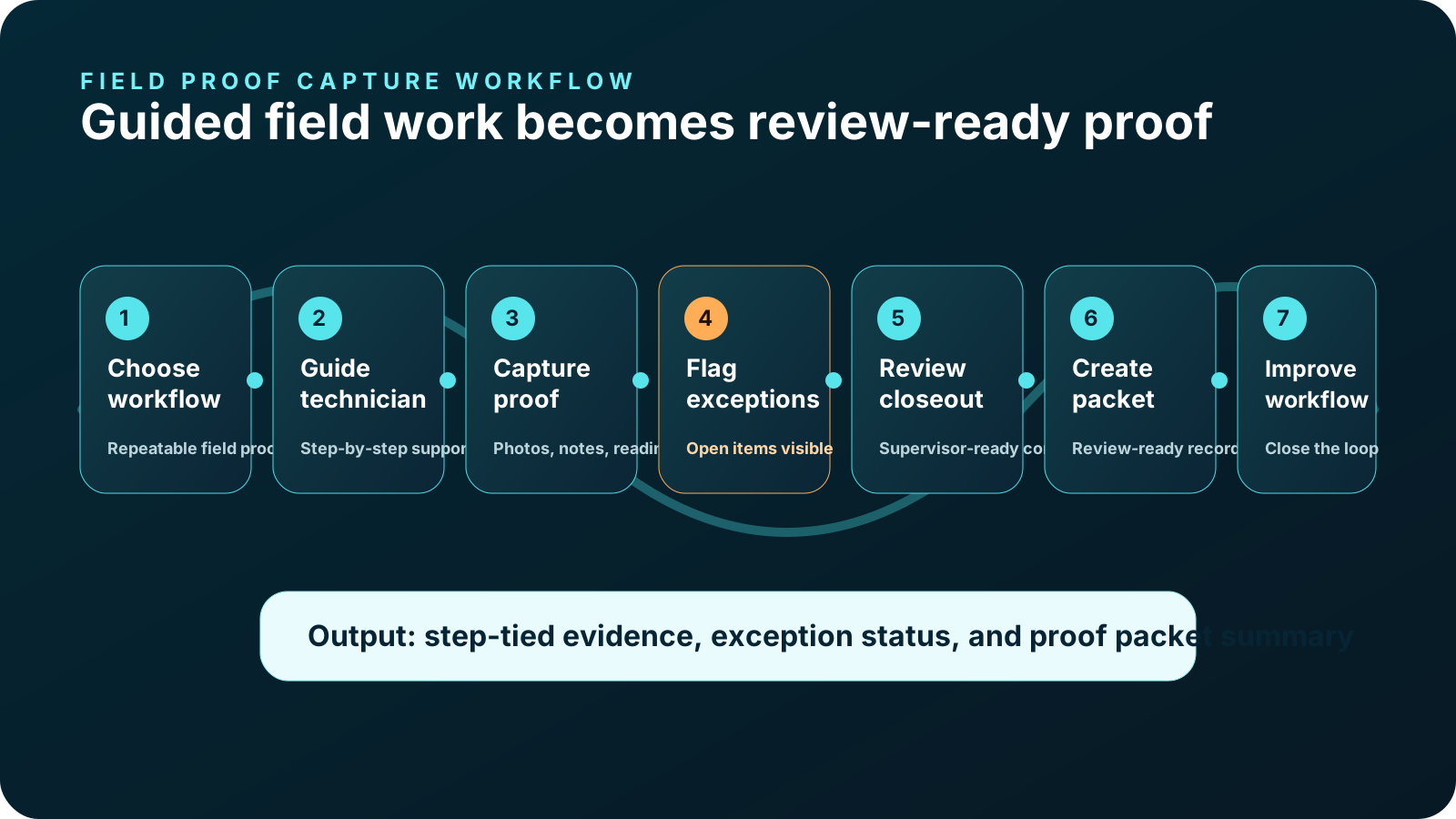
A proof packet is the review-ready output created from the proof-of-work record. The checklist defines what should be captured. The guided workflow prompts the technician or crew while the work happens. The packet organizes the captured evidence into a closeout record.
That packet may be used by a supervisor, customer, warranty team, operations lead, or system of record. The point is not to create a prettier PDF. The point is to reduce ambiguity. A proof packet should tell the job story: what was supposed to happen, what actually happened, what proof supports it, and what still needs attention.
How AI-guided workflows improve proof capture
AI-guided workflows can help when the proof requirement is known but inconsistently captured. Instead of asking a technician to remember every photo, note, exception, and closeout requirement, the workflow can prompt the next step, required proof, and exception path in the moment. That does not replace field judgment. It can help make the expected evidence easier to capture while the job is still happening.
Use a checklist to align operations, supervisors, warranty, IT, and field leads around one workflow.
Guide the technician or crew through steps, photos, readings, notes, exceptions, and signoff.
Organize evidence by step so reviewers can inspect the record without rebuilding the job.
How to choose the first workflow to improve
Do not start with every job type. Start with one repeatable, proof-heavy workflow that is hard to review later. The best first workflow usually has a clear owner, recurring proof gaps, and a measurable closeout problem. It should also have sample jobs or procedures that can be used to map the initial proof standard.
- Pick one workflow that repeats often enough to pilot.
- Confirm the reviewer: supervisor, customer, warranty, quality, audit, or operations.
- Identify the proof gaps that slow review today.
- List the required photos, notes, readings, exceptions, and signoff.
- Gather three to five sample jobs, SOPs, checklists, or closeout examples.
- Decide what a strong proof packet should show after the job.
Turn one proof-heavy workflow into a review-ready standard.
Use the checklist to define what proof is required, then review how CoSkip can guide the workflow and assemble the proof packet.
How CoSkip helps
CoSkip helps teams guide repeatable field workflows, prompt required proof, capture exceptions, and assemble review-ready proof packets depending on pilot scope. It is designed for practical pilot review: one workflow, clear proof expectations, and a closeout record that supervisors, customers, warranty teams, or auditors can inspect.
CoSkip does not replace the technician, the supervisor, the field service platform, safety procedures, warranty terms, or professional review. It supports the workflow by making required proof easier to capture and easier to review. A practical starting point is the proof-of-work checklist, followed by a workflow teardown or pilot scoping conversation.
Field service proof of work FAQs
What is field service proof of work?
Field service proof of work is structured job evidence showing what happened, who completed it, what proof was captured, what exceptions remain, and whether the job is ready for review.
Is proof of work the same as photo documentation?
No. Photo documentation captures images. Proof of work connects those images to workflow steps, notes, timestamps, exceptions, signoff, and reviewer context.
Who uses proof-of-work records?
Supervisors, operations leaders, customers, warranty teams, quality reviewers, auditors, field managers, and system owners may use proof-of-work records depending on the workflow.
Does proof of work guarantee warranty, insurance, or compliance outcomes?
No. Proof of work can organize supporting evidence, but it does not guarantee approval, replace policy terms, replace code requirements, or replace professional review.
What is the best first workflow for proof of work?
The best first workflow is repeatable, proof-heavy, hard to review after the job, and owned by a clear operations, supervisor, warranty, quality, or field leader.
How does proof of work become a proof packet?
The proof-of-work checklist defines required evidence, the field workflow captures it, and the proof packet organizes it into a closeout record.
