Camera footage without job context
Drain video and snapshots are less useful when they are not tied to the exact issue, distance marker, or recommended action.
CoSkip helps sewer and drain teams guide camera inspections, blockage clearing, hydro-jetting, emergency response, approvals, and proof packets with photos, notes, timestamps, exceptions, and signoff.
Sewer and drain jobs move fast. CoSkip keeps the workflow, evidence, customer context, and close-out record connected from the first inspection to the final report. See how step-tied field evidence supports that record.
The work may be done correctly in the field, but the record is often reconstructed later from camera footage, phone photos, handwritten notes, invoices, dispatcher messages, and customer conversations. That creates callback friction, billing disputes, warranty gaps, and supervisor follow-up.
Use step-tied field photos to keep snapshots, distance markers, notes, timestamps, and the recommended action connected.

Drain video and snapshots are less useful when they are not tied to the exact issue, distance marker, or recommended action.
Jetting, clearing, repairs, and cleanup need timestamped evidence customers can trust.
Missing diagnostic steps or unclear notes can turn one visit into avoidable follow-up.
Pricing, scope changes, excavation decisions, and repair recommendations need clear approval records.
Managers should not chase photos, texts, and tech notes after the truck leaves.
Certain jobs need clean records for owners, property managers, municipalities, warranty reviewers, and insurance contexts.
CoSkip keeps guidance, evidence, approvals, and close-out reporting connected while the work is happening. Proof belongs at the step where it happened.
Prompt technicians through inspection, diagnosis, evidence capture, customer communication, service action, and close-out.
Photos, video snapshots, distance markers, notes, timestamps, exceptions, approvals, and signoff attach to the exact workflow step.
The completed job becomes a customer-ready, supervisor-ready, export-ready proof packet.
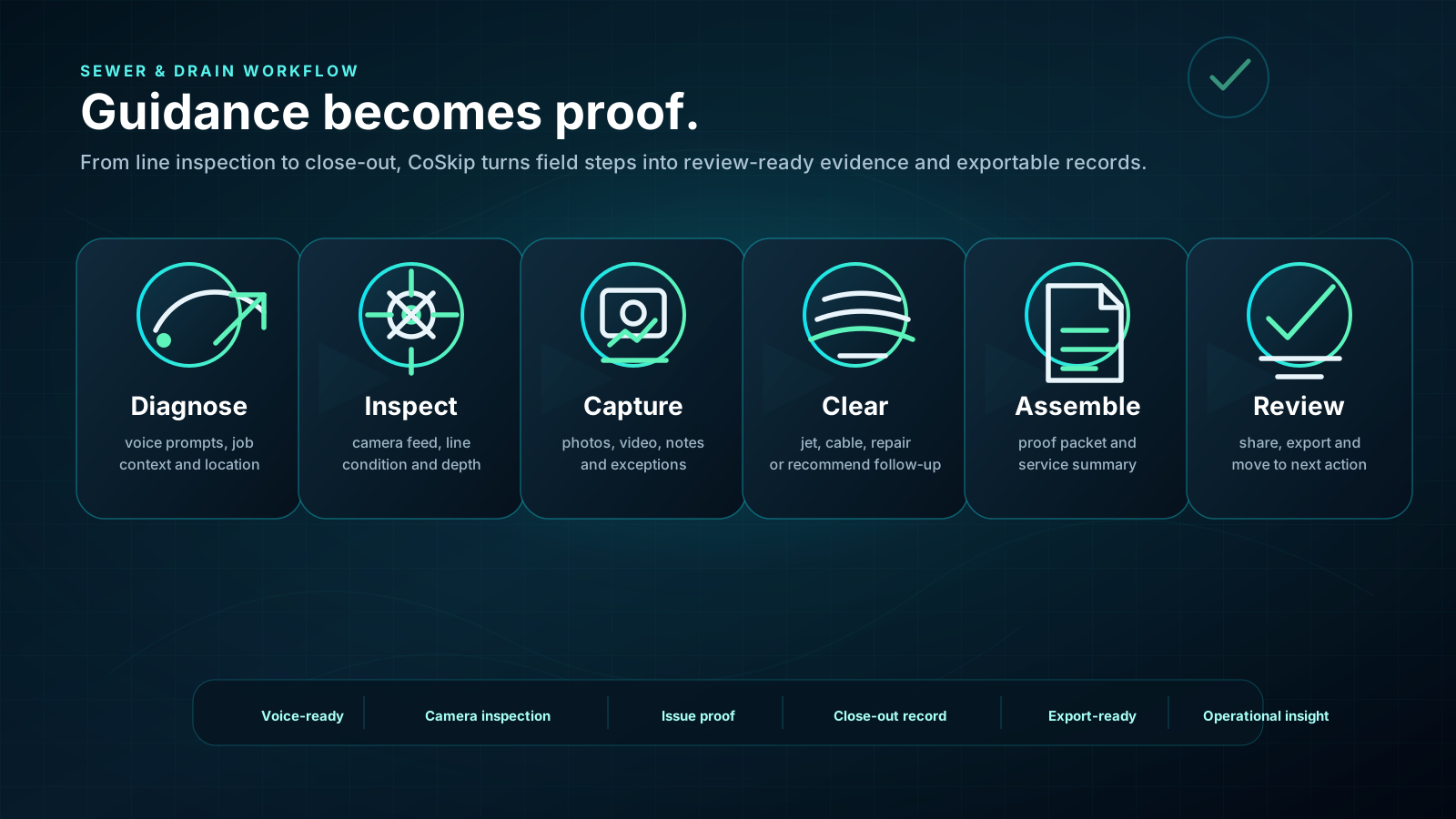

Pain: Video, photos, distance markers, and observations are hard to organize after the job.
CoSkip value: Guide inspection steps and attach snapshots, notes, and recommendations to the exact issue.

Pain: Root cause, access point, service method, and result proof are often scattered.
CoSkip value: Prompt the technician through line check, blockage documentation, service action, and confirmation proof.

Pain: Customers and managers need proof of what was serviced and what changed.
CoSkip value: Capture before/after evidence, jetting details, notes, safety checks, and customer approval.

Pain: Repairs can involve scope changes, customer approvals, site photos, and compliance-sensitive records.
CoSkip value: Structure the workflow from discovery through repair documentation and final verification.

Pain: High-stress calls create incomplete records, unclear exceptions, and customer friction.
CoSkip value: Guide the sequence and capture what happened, what was done, and what still needs follow-up.

Pain: Multi-site and recurring service needs consistent documentation across locations and technicians.
CoSkip value: Standardize checklist execution, asset/location proof, issue logging, and supervisor review.
The goal is not another checklist. The goal is guided work that produces a better record.
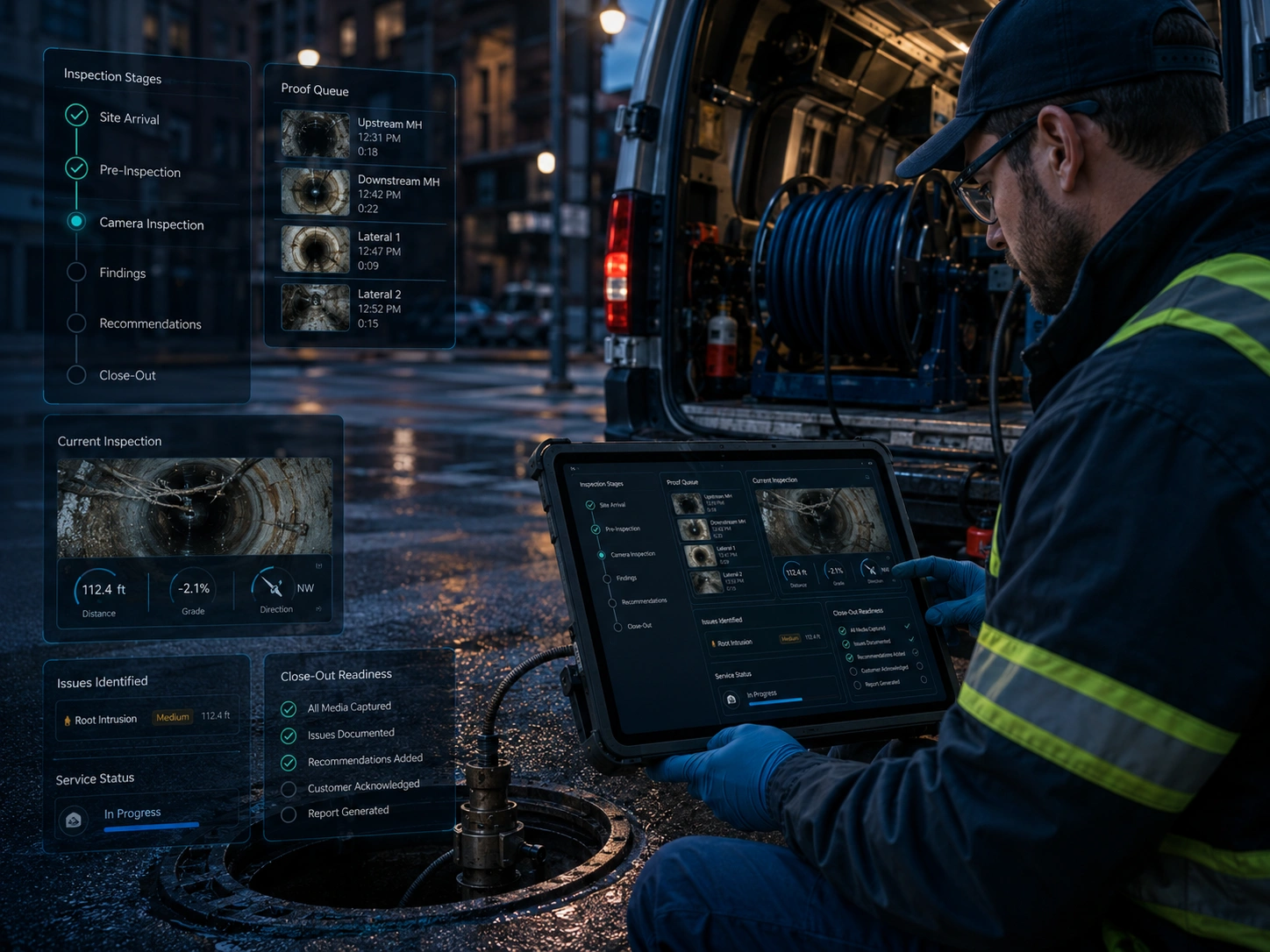
CoSkip organizes the record as the work happens so supervisors, customers, property managers, warranty reviewers, and office teams can see what was inspected, what was found, what was done, and what needs follow-up.
Less after-the-job paperwork and clearer next steps.
Better visibility into job status, exceptions, and customer follow-up.
Faster review without chasing photos, notes, and messages.
Cleaner documentation for disputes, callbacks, and customer trust.
Clear proof of what was inspected, found, serviced, and recommended.
Step-level evidence, timestamps, signoff, and export-ready records.
Outcomes should be directional and pilot-specific. Results depend on workflow scope, adoption, devices, job mix, and review process.
Time spent assembling notes, photos, approvals, and reports.
Repeat visits or follow-up caused by missing documentation.
Required photos, snapshots, notes, and approvals captured per workflow.
Time from job complete to review-ready packet.
Evidence of scope changes, recommendations, and signoff.
Clearer job status and exception context.
A sewer and drain pilot can begin with structured proof packets and exports. As the workflow matures, CoSkip can support integration planning for field service systems, work orders, CRM, billing, document storage, and reporting paths.
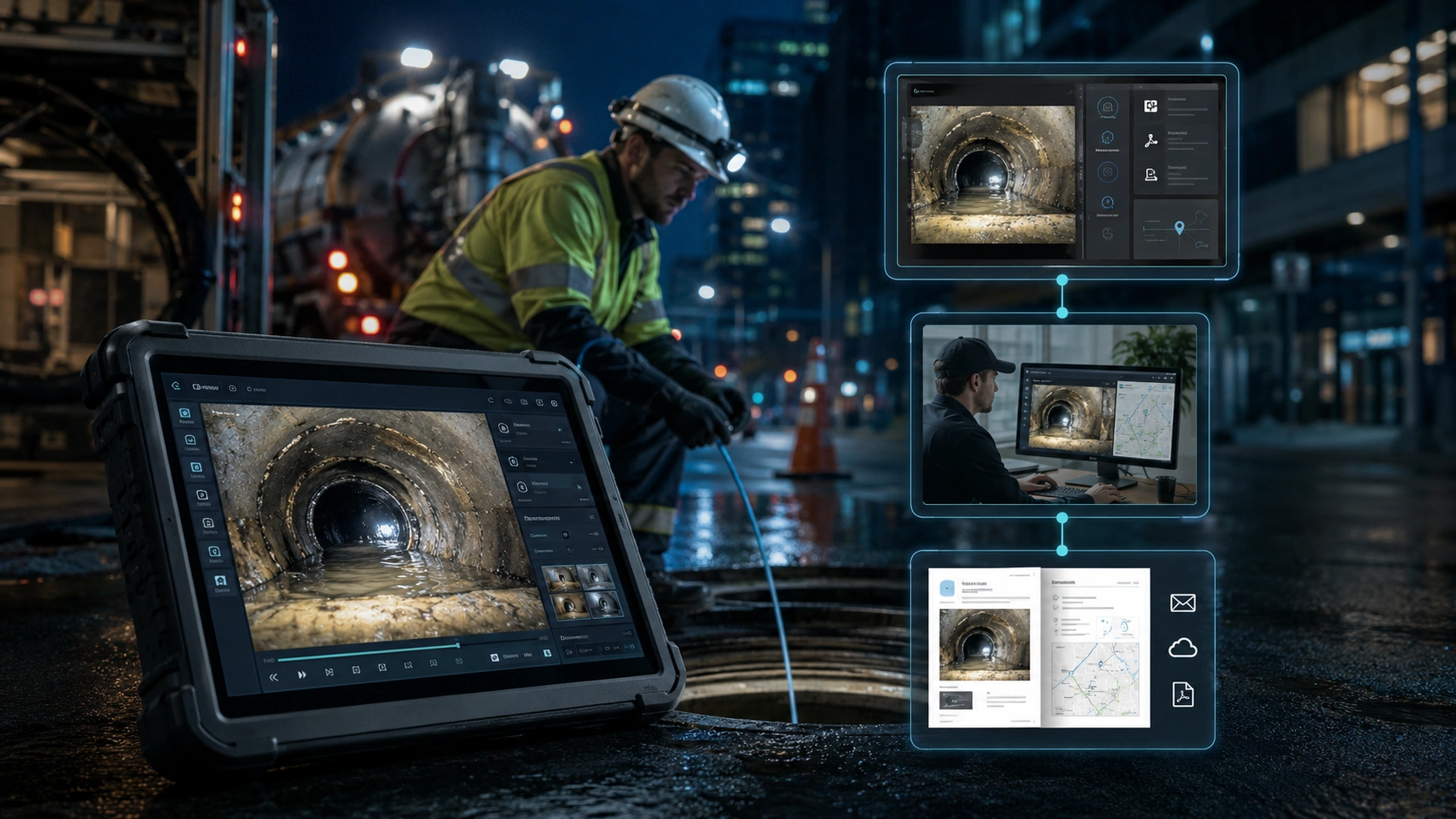
Field records can include customer addresses, property photos, notes, approvals, and workflow context. CoSkip pilots can be scoped around privacy, retention, access, exports, and review paths from the beginning.

CoSkip can help teams understand which jobs are complete, which packets are ready, and which exceptions still need follow-up.

Use the supporting pages to plan proof packets for sewer service, drain close-out, and camera inspection workflows where evidence, recommendations, approvals, and exceptions need to stay connected.
Capture inspection proof, photos, notes, exceptions, signoff, and verified steps in review-ready packets.
Explore sewer and drain proof →Organize camera inspection evidence, technician notes, recommendations, approvals, and closeout proof.
Explore camera inspection proof →Camera inspections, hydro-jetting close-outs, blockage clearing, sewer lateral repair documentation, emergency backup response, and recurring commercial/property maintenance are strong candidates when the workflow is repeatable and proof matters.
No. A pilot can start by capturing structured photos, snapshots, notes, timestamps, and close-out records. Camera/video integration can be scoped later depending on equipment, workflow, and technical requirements.
Yes. CoSkip can prompt technicians to capture required before/after evidence and attach it to the correct workflow step so the record is easier to review.
No. CoSkip is designed to guide the work and generate proof packets. It can start with exports and pilot-scoped integration planning, then connect to systems of record as the workflow matures.
CoSkip can capture approval-related notes, timestamps, customer signoff, and supporting evidence so scope changes and recommendations are easier to document.
No. CoSkip can be piloted by a focused team if there is one repeatable workflow, a clear field lead, and a measurable documentation or proof problem.
Photos, video snapshots, distance markers, notes, issue classifications, service actions, parts/materials, exceptions, timestamps, approvals, and signoff can all be represented depending on pilot scope.
Start with one workflow, a few sample procedures, and a practical success metric. CoSkip will help you turn field guidance into proof your team can review, share, and trust.