Minimal data movement
CoSkip is designed to keep data movement limited and purposeful, especially for voice, image, and workflow inputs used during guided field work.
Security, privacy, and data handling for AI-guided field work
Review CoSkip security, privacy, data handling, enterprise controls, trust resources, DPA, subprocessors, accessibility, and status information for AI-guided field work and proof capture.
Field work can involve sensitive jobsite images, customer context, technician notes, asset details, signatures, and operational records. CoSkip is built to help teams capture the proof they need while giving IT, legal, security, and operations leaders a clear path to review how data is handled.
CoSkip is built for teams that need to guide work in real conditions while protecting sensitive operational data. That means balancing technician usability, proof capture, device constraints, customer expectations, and enterprise review requirements.
CoSkip is designed to keep data movement limited and purposeful, especially for voice, image, and workflow inputs used during guided field work.
Where supported, CoSkip favors on-device or edge-aware processing for voice guidance, recognition, and field workflow interactions.
Pilot and enterprise review paths can include role-based access, SSO/SAML, MDM readiness, retention settings, and audit logs.
CoSkip uses TLS in transit and encrypted-at-rest patterns for protected data storage where applicable.
CoSkip maintains subprocessors and vendor review resources so teams can understand who supports the service and why.
CoSkip is building toward SOC 2 Type I/II and ISO 27001 readiness, with current status and milestones available during review.
A clear path from field guidance to captured proof, admin review, secure export, and scoped system planning.
Work starts on approved phones or tablets.
Voice and visual prompts keep steps repeatable.
Photos, notes, exceptions, and signoff stay tied to the step.
Completed work becomes one structured close-out record.
Supervisors review the packet before export.
Exports and integrations stay pilot-scoped.
A technician begins a guided workflow such as HVAC PM close-out, facilities inspection, warranty repair, safety check, or another repeatable field procedure.
Voice and visual prompts help the technician move through steps, proof requirements, and exception paths.
Photos, timestamps, notes, exceptions, signoff, and step verification attach to the exact workflow step where they belong.
Processing, retention, exports, and review paths are configured according to pilot or enterprise requirements.
Completed work becomes a structured close-out record for supervisor, customer, warranty, compliance, or audit review.
Retention settings, zero-retention options, exports, and deletion requests should be transparent to admins and reviewers.
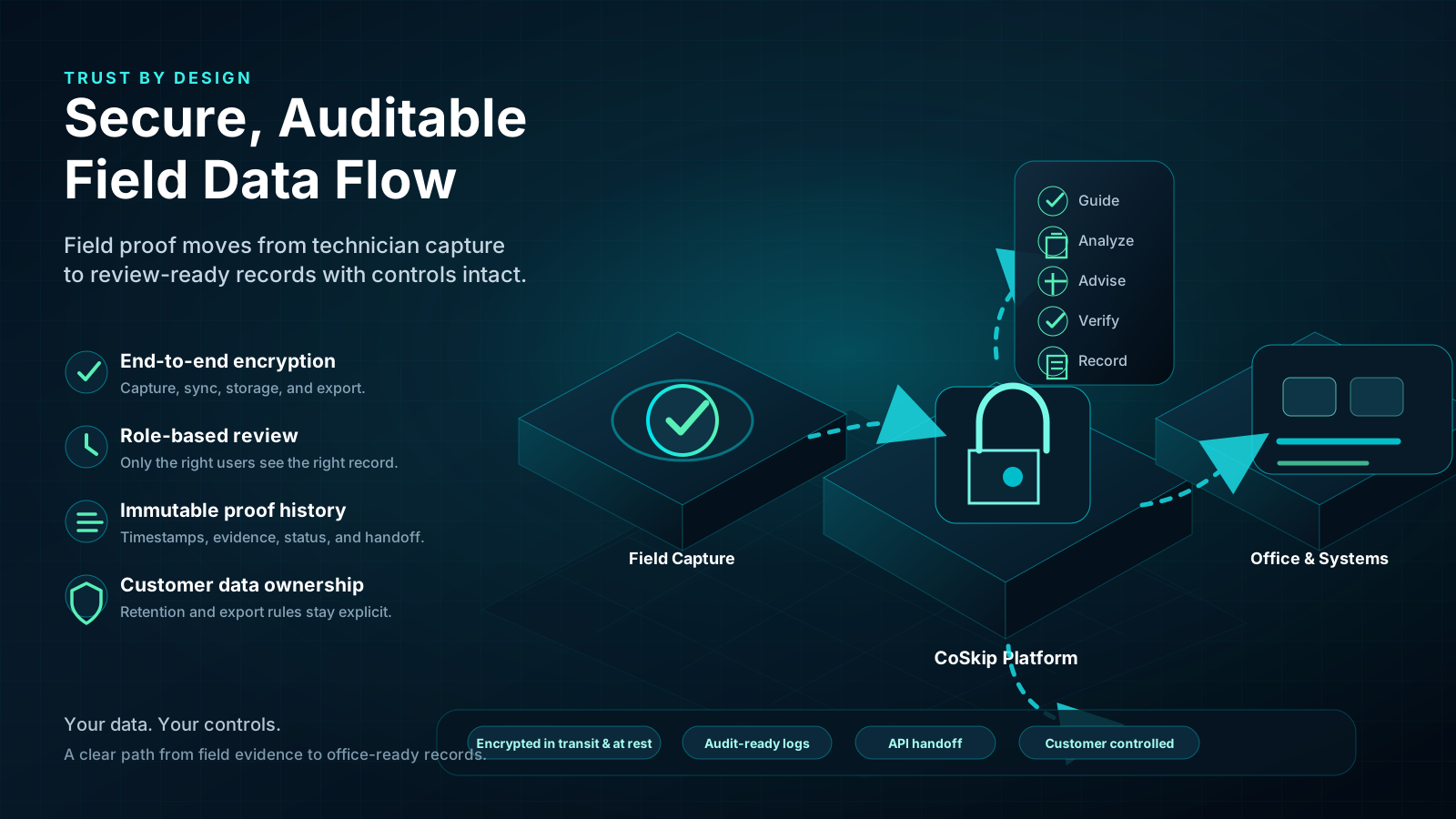
CoSkip's product direction is private-first: provide useful guidance while limiting unnecessary data movement and giving organizations review paths for retention, access, subprocessors, and exports.
CoSkip favors on-device or edge-aware interactions where supported, especially for guidance and recognition workflows.
Data should be used for the workflow and proof outcomes configured by the customer or pilot scope.
Retention and zero-retention options should help organizations match data handling to risk, policy, and operational needs.
CoSkip supports technicians, supervisors, and admins. It should not remove human judgment from field work, safety, or final decisions.
The pilot review separates field-device interactions from optional cloud services, retention controls, and export paths.
The technician starts from the work context.
Guidance stays local or edge-aware where supported.
Evidence attaches to the right workflow step.
Cloud services are scoped during review.
Retention options are reviewed before launch.
Customer-controlled exports support review paths.
The integration path can begin with reviewed exports before API, webhook, or system-of-record work is scoped.
A technician completes the guided process.
Evidence becomes a review-ready record.
Teams validate output before automation.
Technical scope follows pilot fit.
Records move only where needed.
CoSkip, Inc.
Delaware, USA
New York, NY, USA
What CoSkip collects, why it is collected, and how website visitors, pilot users, and enterprise deployments are addressed.
Standard data processing terms for GDPR/UK GDPR and US state privacy-law review, including SCCs annex, TOMs, and subprocessors reference where applicable.
Current vendor list with purpose, data types, regions, and change-log options.
High-level architecture, encryption, access control, vendor management, incident response, and SDLC practices.
CoSkip is building toward SOC 2 Type I/II and ISO 27001. Current milestones and attestations can be requested during vendor review.
Availability, incident history, and scheduled maintenance windows for CoSkip services.
Some documents may be shared under NDA or during pilot/vendor review depending on the request.
See the DPA Annex II for full TOMs.
CoSkip pilots start with one workflow, but security and data handling should be scoped early. The goal is to test a real field workflow while clarifying what data is used, where it goes, how long it is retained, who can access it, and how proof packets are exported or reviewed.
Identify the target workflow, data types, proof requirements, devices, users, and systems of record.
Review photos, notes, timestamps, voice inputs, customer/job context, retention, and export expectations.
Confirm SSO/SAML, RBAC, MDM readiness, admin access, technician devices, connectivity, and field constraints.
Use the DPA, subprocessors list, Security Overview, and TOMs for security/legal review.
Run the pilot with agreed proof rules, data handling, review cadence, and results evaluation.

A pilot can move quickly while still clarifying data, devices, retention, legal resources, and admin controls.
Pick one field process.
Map evidence and context.
Confirm field constraints.
Set export and retention paths.
Use DPA and vendor resources.
Configure access and logs.
Plan readiness after results.
View current service availability, incident history, and scheduled maintenance windows.
View StatusSecurity researchers, customers, and partners can report vulnerabilities or incidents to CoSkip's security contact.
Email SecurityFor access, deletion, correction, or other data subject requests, contact CoSkip. If CoSkip processes data on behalf of an employer/customer, CoSkip will coordinate with the relevant admin.
Submit Data RequestIncident and data-request handling may depend on customer role, pilot scope, applicable law, and contractual terms.
CoSkip is building toward SOC 2 Type I/II and ISO 27001 readiness. Security milestones and available documentation can be requested during vendor review.
Private-first means CoSkip is designed to limit unnecessary data movement, favor on-device or edge-aware guidance where supported, provide admin controls, and make retention, access, subprocessors, and exports reviewable.
Depending on configuration and pilot scope, CoSkip may handle workflow steps, photos, visual evidence, timestamps, technician notes, exceptions, signoff, device metadata, and customer/job context supplied by the organization.
CoSkip provides or is building configurable retention and zero-retention options for certain transient audio/image processing flows. Confirm exact behavior during pilot scoping or vendor review.
The current Trust content references SSO/SAML and MDM-ready deployment planning. Confirm exact availability, configuration, and pilot requirements during security review.
CoSkip is designed to produce structured proof packets that can support supervisor, customer, warranty, compliance, or audit review. Export format and integration path depend on pilot scope.
CoSkip maintains a subprocessors resource with vendor purpose, data types, region, and update feeds where available.
Start by selecting one target workflow, identifying the data involved, confirming devices and systems, and requesting CoSkip's security resources, DPA, subprocessors, and TOMs.
Start with one workflow, confirm the data and device environment, and review the security, privacy, and compliance resources your team needs before field testing.