Operations leaders
Choose a workflow that is repeatable enough to scope and review.
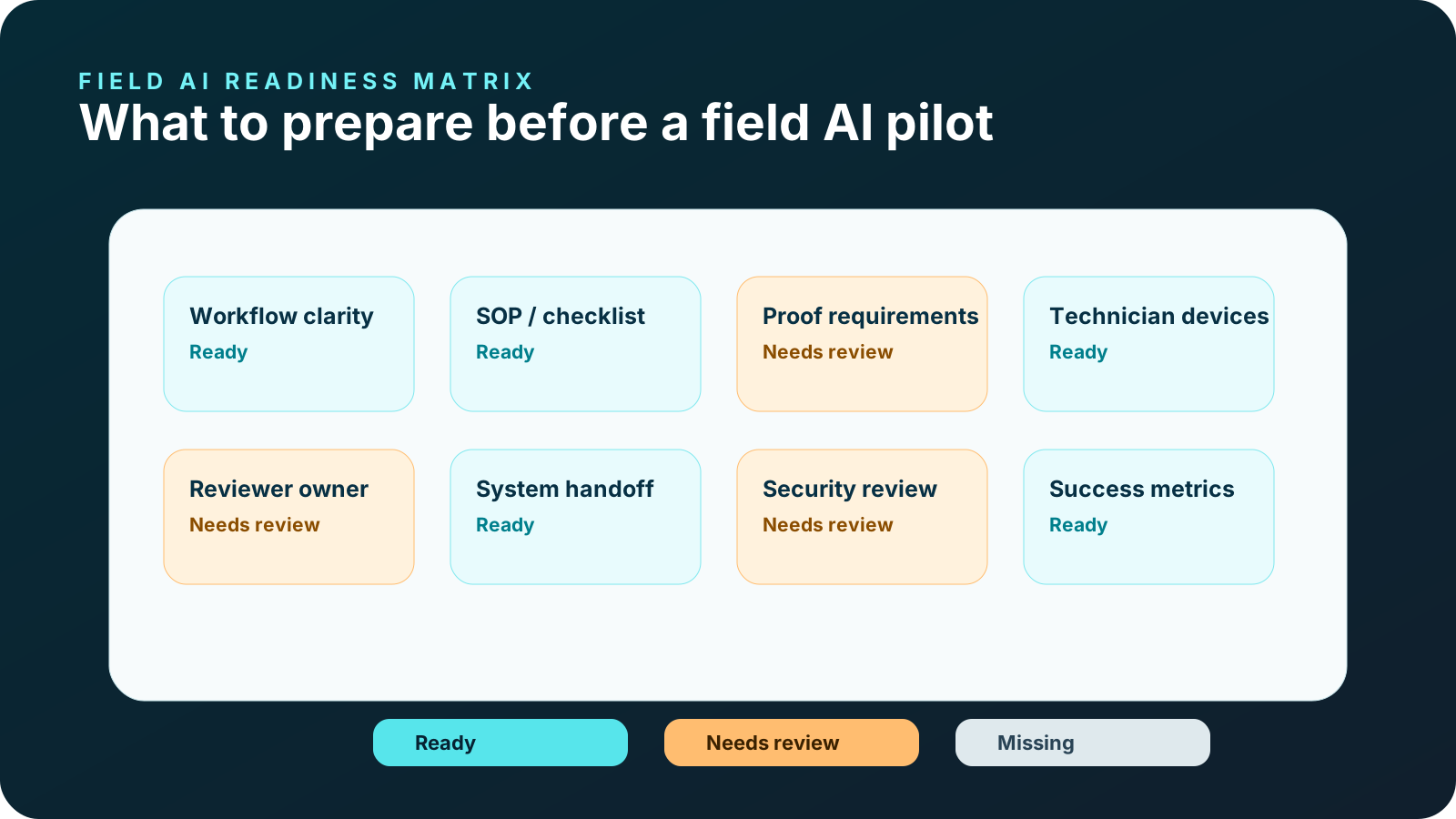
Use this worksheet to decide whether one repeatable field workflow is ready for an AI-guided pilot with clear steps, proof requirements, technician users, reviewer ownership, system handoffs, and success metrics.
This worksheet helps teams prepare for scoping. It does not guarantee pilot acceptance, pilot success, ROI, adoption, or operational improvement.
It is built for operations leaders, field supervisors, IT and security reviewers, pilot owners, technician leads, and executive sponsors preparing one field AI pilot candidate.
Choose a workflow that is repeatable enough to scope and review.
Identify the users, devices, jobsite conditions, and adoption risks.
Define proof, exceptions, signoff, and closeout expectations.
Clarify data, access, retention, export, and system handoff needs.
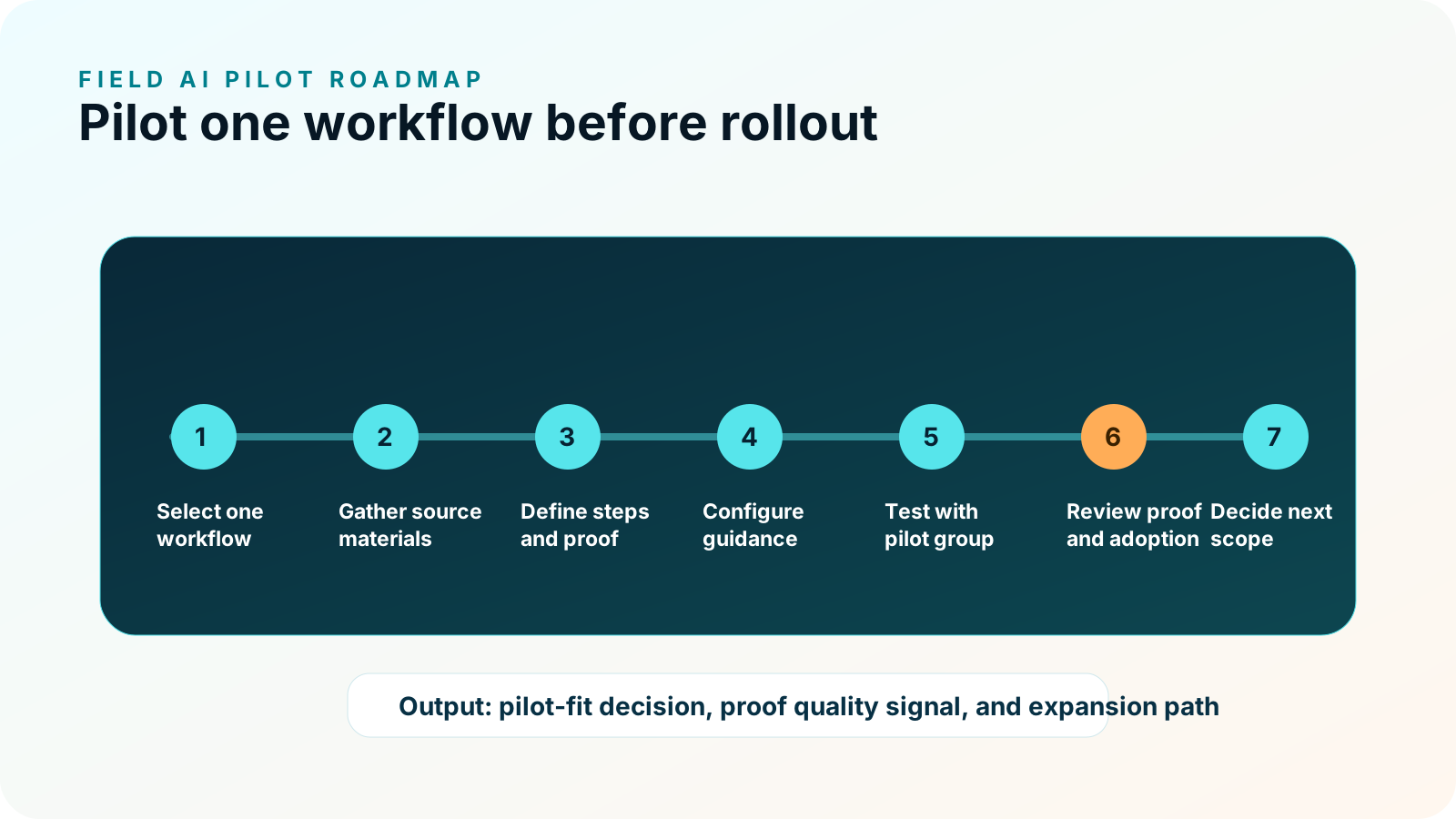
Start with one repeatable, proof-heavy workflow rather than a broad rollout.
Collect SOPs, job notes, checklists, photos, manuals, or expert process notes.
Name the evidence, exception paths, signoff needs, and review owners.
Request a workflow teardown or pilot review based on the readiness band.
Score each category from 0 to 3. The score is directional and not a pilot acceptance decision. If JavaScript is unavailable, total the values manually.
The workflow needs clearer source material, ownership, proof requirements, or pilot context.
Gather proof requirements →The workflow may be worth exploring, but several readiness gaps could slow configuration or adoption.
Use readiness score →The workflow is credible for scoping if the team tightens source materials, owners, proof, and metrics.
Request teardown →The workflow has a strong planning foundation for a guided-work pilot conversation.
Apply for pilot →Use this checklist before a workflow teardown, readiness review, or pilot conversation.
Define the workflow, operations owner, field lead, and reviewer owner.
Gather 3-5 sample jobs, notes, manuals, photos, or expert process context.
List required photos, readings, notes, signoff, exception details, and closeout summary needs.
Name the technician users, field conditions, device constraints, and adoption concerns.
Clarify FSM, CMMS, CRM, export, proof packet, API, webhook, or attachment expectations.
Define the signals: missing proof, review time, closeout quality, callback reasons, adoption, or pilot fit.
Repeatable closeout, required proof, exceptions, and supervisor review.
Explore PM closeout →Photos, timestamps, notes, signoff, and verified steps.
Explore HVAC proof →Before/after proof, parts notes, repair rationale, and review path.
Explore warranty documentation →Diagnostic proof, repair evidence, notes, exceptions, and handoff.
Explore plumbing proof →Inspection context, customer-ready proof, and completion status.
Explore sewer proof →Inspection evidence, readings, closeout proof, and supervisor review.
Explore electrical closeout →Contractor proof, site notes, recurring checks, and operations review.
Explore facilities verification →Asset context, field notes, exceptions, and review-ready records.
Explore utility inspection →CoSkip can help with workflow teardown, guided workflow configuration, proof capture, exception handling, proof packets, readiness review, and pilot path planning depending on scope.
Before choosing the pilot path, see how these readiness inputs come together in a guided field workflow demo.
Collect SOPs, job notes, sample jobs, proof expectations, and exception examples.
Read prep guide →Define the evidence a technician should capture before closeout.
Open proof checklist →Estimate repeat visit, proof follow-up, admin review, and closeout friction.
Open callback worksheet →Find the weakest proof categories before choosing the workflow to pilot.
Open proof scorecard →Map steps, proof requirements, exception paths, systems, and review output.
Request teardown →Bring one workflow into a focused pilot path with guided work and proof capture.
View pilot program →Field service AI software, AI copilot, AI technician assistant, and interactive demo.
Proof-of-work software, proof packets, sample proof packet, photo documentation, and close-out software.
Warranty proof of work, warranty claim documentation, proof packet template, and job closeout checklist.
Field AI readiness, ROI calculator, trust, and integrations.
A field AI pilot readiness worksheet helps teams assess whether one repeatable workflow is prepared enough for AI-guided pilot scoping across workflow, proof, devices, reviewers, systems, and metrics.
A strong candidate is repeatable, has source materials, defined proof requirements, identified technician users, reviewer ownership, workable devices, understood system handoffs, and success metrics.
No. Perfect SOPs are not required, but the team should have enough source material and workflow knowledge to map the steps, proof, and exception paths.
Prepare SOPs, checklists, job notes, sample jobs, photos, manuals, expert notes, exception examples, proof requirements, and closeout examples where available.
Define required photos, readings, notes, timestamps, exception details, signoff, and reviewer expectations for the selected workflow.
A pilot usually needs an operations owner, field lead, technician users, supervisor or reviewer owner, IT or security reviewer where appropriate, and an executive sponsor.
Not always. Many pilots can begin with structured proof packets and exports, then scope integrations after the workflow and review path are clear.
No. The score is directional and does not guarantee pilot acceptance, pilot success, ROI, adoption, or operational improvement.
The worksheet helps a team prepare one workflow in more detail before or after using the broader Field AI Readiness Score.
Use this worksheet with the proof gap scorecard and callback worksheet to decide whether to gather more materials, request a teardown, or apply for a pilot.