Service business owners
Estimate how repeat visits, proof gaps, and customer follow-up add up.
Use this worksheet to estimate the operational cost of callbacks and repeat visits, including technician time, travel, admin review, missing proof, warranty friction, and customer follow-up.
This is a directional planning estimate. It is not a financial guarantee, accounting analysis, or promise of savings.
It is built for HVAC and service business owners, operations leaders, service managers, finance leaders, field supervisors, and teams preparing ROI assumptions for one repeatable workflow.
Estimate how repeat visits, proof gaps, and customer follow-up add up.
Connect callback reasons to workflow, proof, exception, and closeout issues.
Separate directional cost assumptions from unsupported savings claims.
Carry transparent assumptions into the ROI calculator and pilot plan.
This worksheet produces a directional planning estimate. It is not a financial guarantee, accounting analysis, or promise of savings. Actual results depend on workflow, service mix, adoption, systems, and operational execution.
Enter directional assumptions. No data is submitted, no PII is required, and the formulas are shown below.
The calculator does not claim savings. It helps expose the cost drivers that may be worth reviewing when proof, closeout, and callback reasons are hard to see.
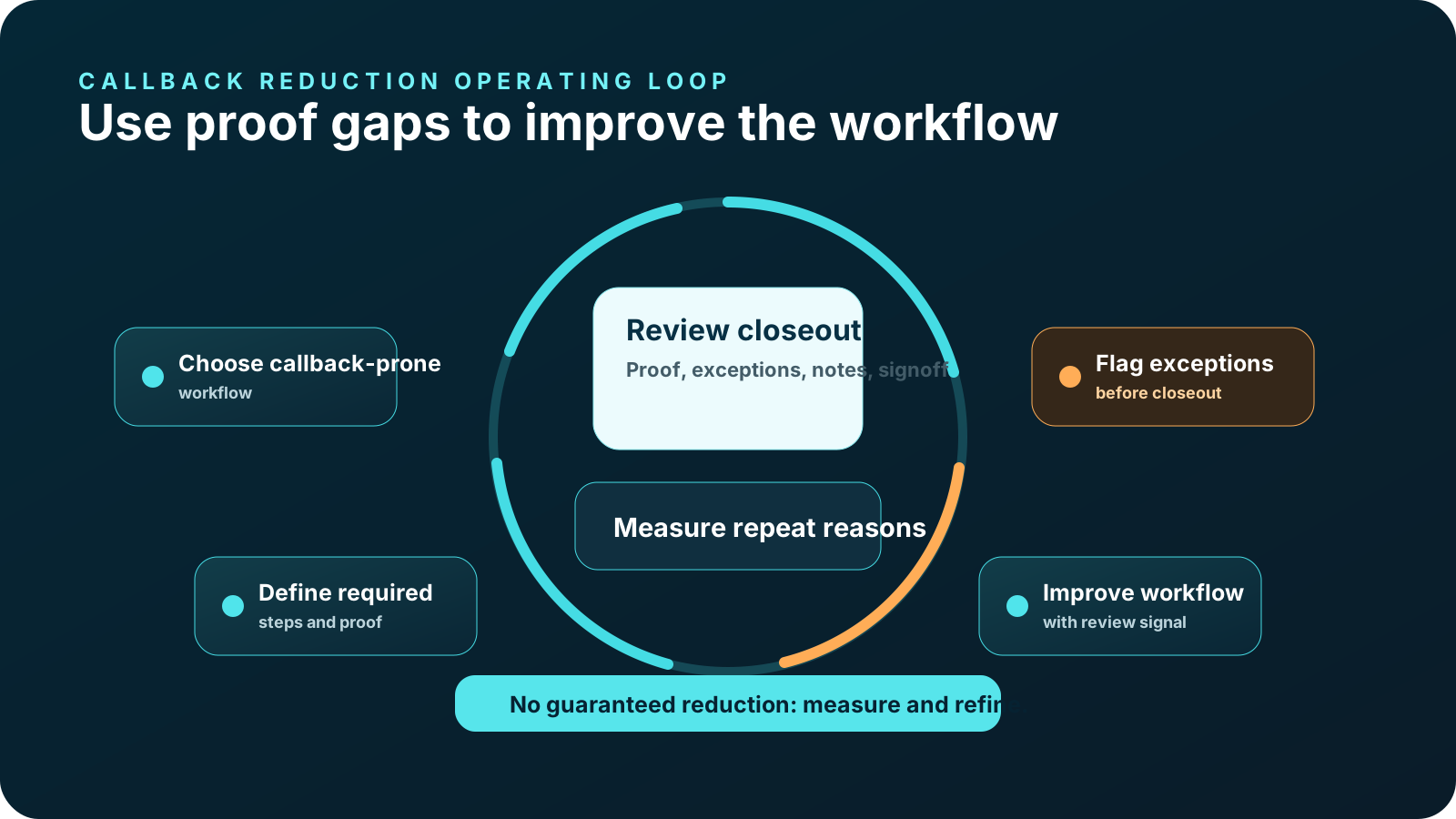
Repeat visits can trigger dispatch work, supervisor review, customer communication, and documentation cleanup.
Photos, readings, notes, or signoff may be chased after the job instead of captured during work.
Weak summaries make it harder to know whether the job was complete or what changed.
Warranty-related work often needs before/after evidence, parts notes, rationale, exceptions, and signoff.
Step-level evidence can make review easier than scattered photo uploads and notes.
Even modest review friction can matter when the same workflow repeats every week.
CoSkip can help teams guide the workflow, capture step-level evidence, flag exceptions, and create review-ready closeout records. Actual callback outcomes depend on workflow, service mix, adoption, systems, and operational execution.
Carry your callback, proof, paperwork, and closeout assumptions into the broader ROI model.
Calculate ROI →Find whether the callback-prone workflow also has weak photos, notes, exceptions, or closeout.
Open proof scorecard →Review the guided workflow model for repeat visit reasons, proof capture, and closeout quality.
Explore workflow →Map the steps, proof, exception paths, systems, and review output for one workflow.
Request teardown →Use the worksheet to support one workflow conversation with operations and field leaders.
View pilot program →Assess whether the callback-prone workflow is ready for guided work, proof capture, and pilot review.
Open readiness worksheet →Proof-of-work software, proof packets, sample proof packet, photo documentation, and close-out software.
Warranty proof of work, warranty claim documentation, and warranty checklist.
A callback cost worksheet is a planning tool for estimating repeat visit cost, technician labor, travel, admin review, missing proof follow-up, warranty friction, and closeout drag.
Teams can estimate callbacks by multiplying monthly job volume by callback or repeat visit rate, then adding labor, travel, parts, admin review, proof follow-up, and other friction costs.
Include technician time, travel or dispatch cost, parts or materials where applicable, admin review time, customer follow-up, warranty rework, and proof chasing.
Yes. Admin and supervisor review time can be a real source of friction when proof is missing, closeout notes are unclear, or warranty documentation needs reconstruction.
Missing proof can create supervisor follow-up, customer communication, warranty rework, repeat review, and uncertainty about why a callback happened.
No. The worksheet produces a directional planning estimate, not a financial guarantee, accounting analysis, or promise of savings.
CoSkip can help teams guide repeatable workflows, capture required proof, flag exceptions, and review closeouts. Actual callback outcomes depend on workflow, adoption, service mix, and operational execution.
Choose a repeatable workflow where repeat visits often connect to missing proof, unclear steps, unresolved exceptions, warranty friction, or incomplete closeout.
This worksheet helps identify cost assumptions that can be carried into the ROI calculator and pilot planning process.
Compare cost assumptions with proof gaps and field AI readiness before choosing a first workflow for teardown or pilot scoping.