Incomplete job context
Technicians may lack the configured workflow context needed for the job.
CoSkip supports HVAC first-time fix improvement by helping teams guide repeatable work, surface configured context, capture required proof, flag exceptions, and improve closeout review visibility.
It does not guarantee first-time fix rate improvement. It helps teams build the operational record needed to understand work quality, proof gaps, exceptions, and repeat-visit patterns.
HVAC first-time fix rate measures the share of service issues resolved without an avoidable repeat visit.
It is not only about doing the work. Teams also need to know what happened, what proof was captured, what exceptions remained, and why a repeat visit did or did not occur.
Some repeat visits come from unavoidable factors. Others are easier to understand when job context, proof, exceptions, and closeout quality are captured consistently.
Technicians may lack the configured workflow context needed for the job.
Different execution paths make it harder to compare outcomes across jobs.
Without proof, supervisors may not know what was checked or completed.
Parts, approvals, customer context, or unresolved findings need to stay visible.
Guidance can help surface approved process context where configured.
Review is slower when evidence is scattered across notes, photos, texts, and systems.
CoSkip helps teams configure repeatable workflows so technicians can follow the intended process and reviewers can see what happened afterward.
Choose the repeatable service path and gather relevant SOPs, examples, and proof needs.
Prompt the configured steps and closeout requirements while the work happens.
Where configured, help technicians find source-aware guidance from approved material.
Attach photos, notes, timestamps, and signoff to the right step.
Make exceptions and unresolved issues visible before closeout.
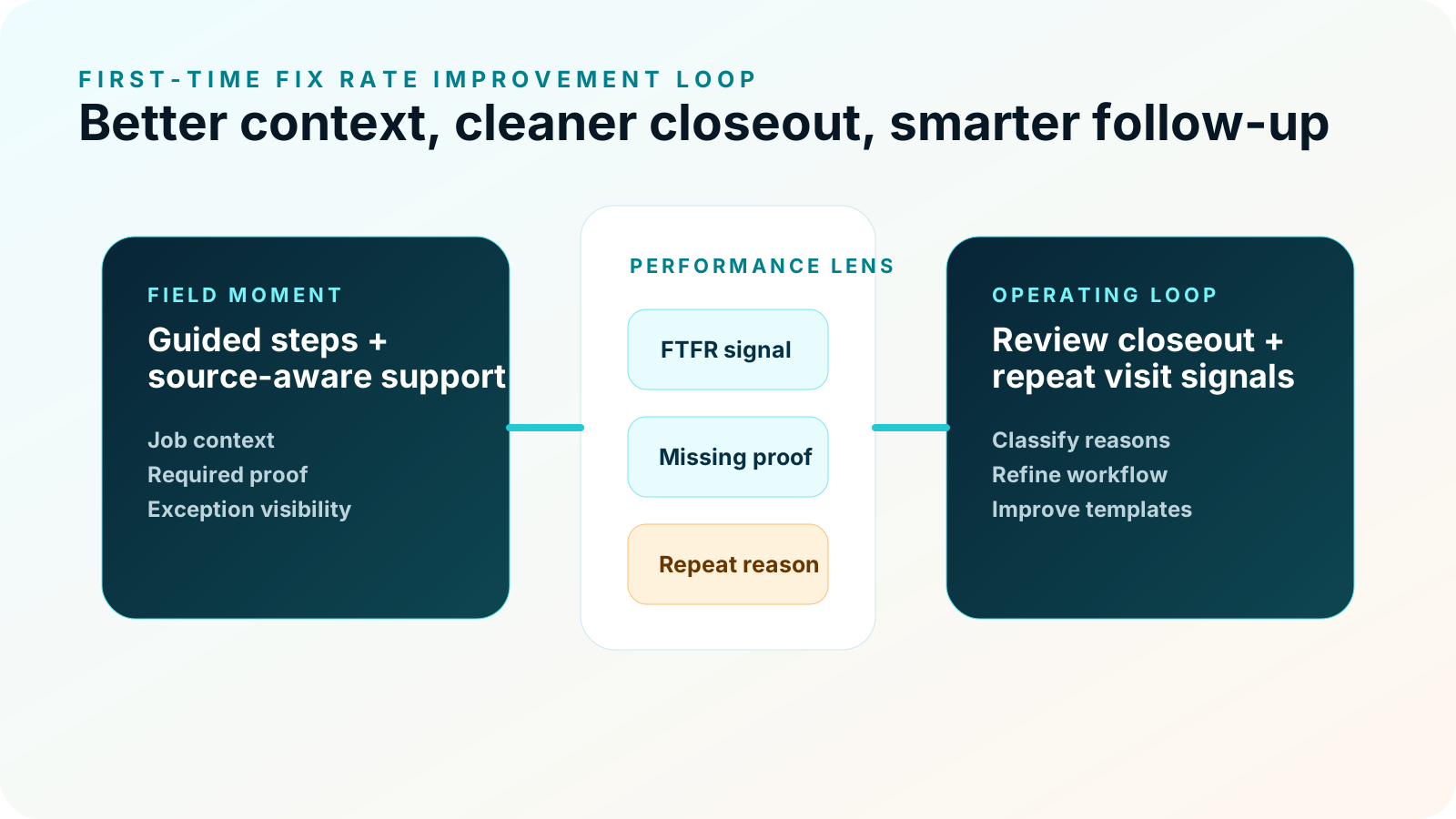
Better proof helps supervisors see whether repeat visits connect to missing steps, unclear evidence, unresolved exceptions, workflow friction, or other patterns. It also makes closeout review more actionable.
If the first visit creates a next-step recommendation, structured proof can also support the service-to-sales handoff without asking teams to rebuild jobsite context later.
Use your own operational data and pilot results. CoSkip can help structure the workflow record so measurement is easier.
Track avoidable repeat visits connected to the selected workflow.
Measure repeat visit patterns alongside first-time fix rate.
Track required evidence gaps at closeout.
Record why repeat visits happen instead of relying on memory.
See which unresolved issues appear most often.
Measure whether proof packets reduce reconstruction work.
Track whether technicians can follow the configured workflow.
Review whether warranty evidence is complete enough for review.
When a repeat visit happens, the proof packet can help supervisors see whether the root issue was missing proof, workflow friction, an unresolved exception, customer context, parts availability, or another factor.
Start with a workflow where first-time fix rate, callbacks, proof quality, and exception handling are measurable. Then define the guidance path and proof packet structure for that workflow.
Use field workflow readiness to check whether the selected service path has clear steps, proof requirements, reviewers, and pilot ownership before measuring first-time-fix support.
Choose a service path where avoidable repeat visits are visible.
Define evidence, notes, signoff, and exception details.
Track proof completeness, repeat reasons, and supervisor review time.
See how closeout evidence can be organized for review.
View sample proof packet →Connect first-time fix efforts to guided work and proof capture.
Field service AI software →See how field guidance can support technicians during repeatable workflows.
Field service AI copilot →Review resource paths, security posture, and integration planning for one pilot workflow.
Resource center →HVAC first-time fix rate measures the share of service issues resolved without an avoidable repeat visit.
Teams commonly compare jobs resolved on the first visit against total relevant service jobs, while excluding repeat visits that are not avoidable or not comparable based on the business definition.
CoSkip can support improvement efforts by guiding repeatable workflows, capturing proof, flagging exceptions, and improving review visibility. It does not guarantee FTFR improvement.
No. Results depend on workflow, technician adoption, procedure quality, operational process, parts availability, customer context, and pilot scope.
Proof capture helps supervisors understand what happened on the first visit and identify patterns in missing steps, unclear evidence, exceptions, and repeat visit reasons.
Callbacks are avoidable or repeat visits that can reduce first-time fix rate, depending on how the team defines and tracks the metric.
Start with a repeatable service or closeout workflow where repeat visits, proof gaps, exception handling, and review time can be measured.
CoSkip can guide configured steps, surface approved context where scoped, prompt required proof, capture notes, and flag exceptions before closeout.
Calculate ROI, try the demo, or apply for a focused pilot around guided work, proof capture, and closeout review.