
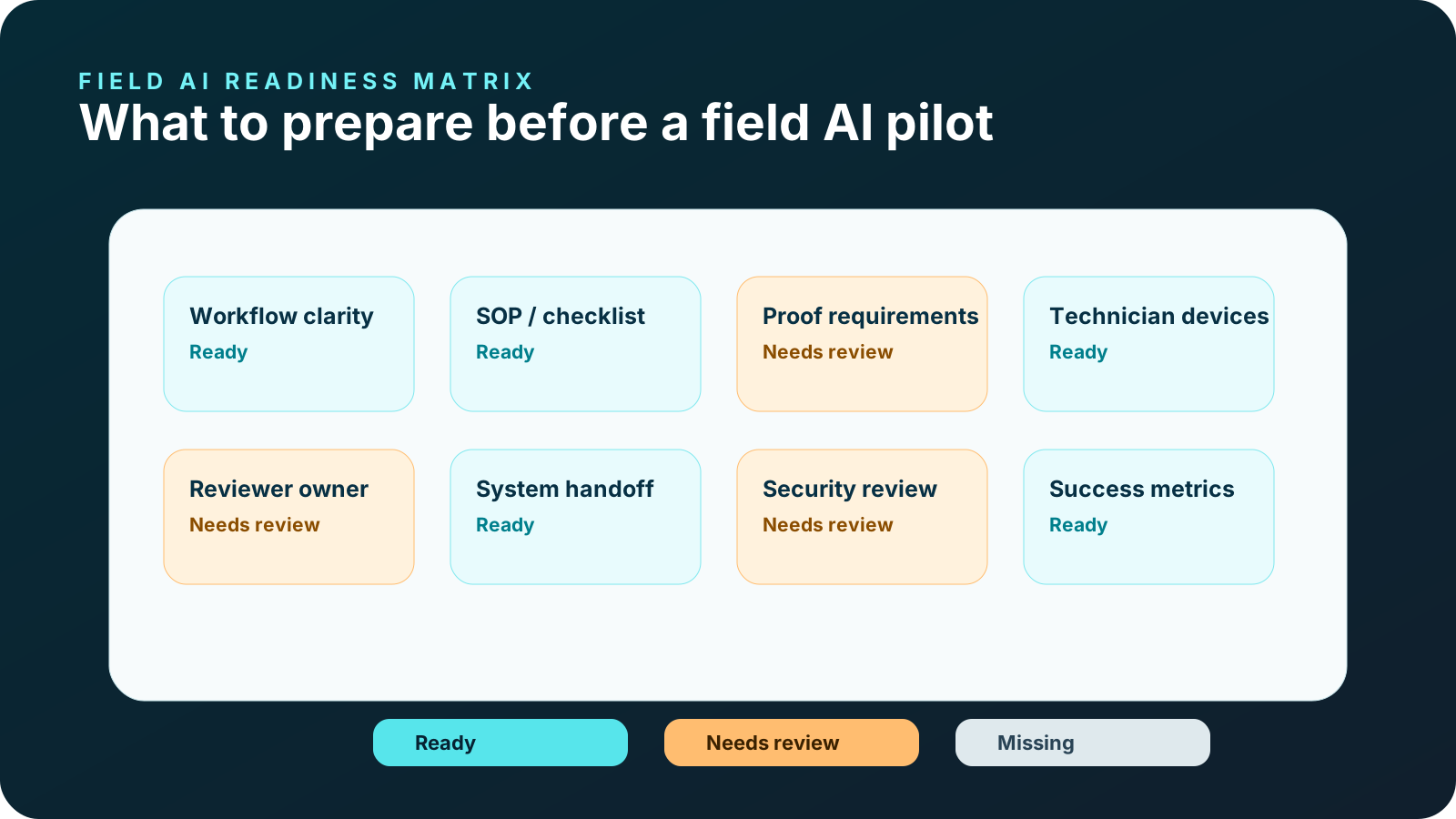
Prepare for a field AI pilot by gathering SOPs, checklists, job examples, proof requirements, devices, reviewers, security needs, and success metrics.
Before a field AI pilot, prepare one target workflow, approved source materials, 3-5 sample jobs, proof requirements, known exception paths, device assumptions, field leads, review owners, security needs, system handoffs, and success metrics.
The goal is not to make the team perfect before starting. The goal is to make the first pilot concrete enough that guidance, proof capture, technician adoption, and closeout quality can be evaluated on a real workflow.
CoSkip supports configured field workflows, proof capture, exception visibility, and review-ready closeout. It does not replace technicians, professional judgment, safety procedures, licensing, formal training, manufacturer guidance, supervisor review, field service management systems, warranty systems, legal review, or compliance programs. Pilot outcomes depend on workflow scope, adoption, available source material, system fit, and operating conditions.
Preparation checklist
- 1Target workflow
Name the inspection, repair, PM closeout, warranty process, customer handoff, or recurring check you want to pilot first.
- 2Source materials
Gather SOPs, checklists, manuals, job notes, site instructions, warranty requirements, and expert process knowledge where available.
- 3Sample jobs
Prepare 3-5 representative work orders, closeout examples, proof packets, or job notes that show real variation.
- 4Proof requirements
List required photos, timestamps, readings, notes, measurements, signoff, and exception details.
- 5Exception paths
Identify what technicians should do when access is blocked, proof is missing, conditions are unresolved, or a customer question appears.
- 6Field users
Choose technician leads, supervisors, or crews who can test the workflow and provide useful feedback.
- 7Review owners
Define who inspects the proof packet: supervisor, customer success, warranty, quality, operations, or auditor.
- 8Device and environment
Confirm device type, connectivity, mobile usability, PPE constraints, and field conditions.
- 9Systems and export path
Understand where closeout records need to go: FSM, CRM, CMMS, warranty system, document store, or customer record.
- 10Success metrics
Choose measurable signals such as proof completeness, review friction, adoption, exception visibility, or workflow-specific business-case signals.
What source materials to gather
Source materials do not need to be perfect, but they should be real. A pilot can expose gaps in your SOPs or checklists, but it cannot configure useful guidance from materials no one can identify.
Standard procedures
Use current procedures, even if they need cleanup, so the pilot starts from real operating practice.
Field checklists
Gather inspection, PM, repair, safety, customer handoff, or closeout checklists.
Completed jobs
Bring representative work orders, photos, notes, exceptions, and closeout examples.
Field lead knowledge
Document the unwritten steps experienced technicians use to complete the workflow.
Reviewer standards
Collect what supervisors, warranty teams, quality, or customers expect to see.
Handoff requirements
Identify which records need to be exported, attached, synced, or reviewed after the job.
Proof and closeout preparation
Proof requirements are the difference between a useful pilot and a generic AI experiment. Define what the technician must capture before the job is considered review-ready. The answer may vary by workflow, but the structure is usually consistent: job context, step, evidence, exception, signoff, reviewer, and closeout status.
Customer, site, work order, asset, location, crew, or contractor reference.
The configured task, inspection step, repair action, closeout checkpoint, or follow-up path.
Photos, readings, measurements, timestamps, notes, materials, parts, or signoff.
Missing proof, blocked access, customer questions, unresolved conditions, or follow-up needs.
Supervisor, customer, warranty, quality, operations, IT, security, or audit reviewer.
Proof packet, export, system handoff, review queue, or pilot decision.
Security and integration readiness
Field AI pilots should include IT and security early enough to avoid surprises, but not so early that the pilot becomes an undefined enterprise implementation. Start by identifying the data involved, device environment, user roles, access needs, retention expectations, export path, and systems that may eventually receive records.
- What devices will technicians use?
- What data will the pilot capture?
- Who can access proof packets and closeout records?
- Do customer, warranty, or operational records require special handling?
- Does the pilot need SSO, MDM, role-based access, audit logs, exports, APIs, or webhooks?
- Which system is the source of record for job status after the pilot?
- What security or trust materials should IT review before field testing?
Readiness signals to check before rollout
The process happens often enough that templates, prompts, proof requirements, and exception paths are worth configuring.
SOPs, checklists, job notes, manuals, or expert process knowledge are available where the pilot will use them.
Supervisors, warranty teams, customers, or quality reviewers can identify required photos, notes, readings, signoff, or exceptions.
The field experience fits device use, connectivity, PPE, job timing, and technician attention during the task.
Someone can make tradeoffs, gather feedback, resolve blockers, and decide whether to refine, expand, or pause.
The team knows where the proof packet, export, or summary must go after the job.
Field service examples
PM closeout
A technician sees the next PM step, captures equipment condition proof, records a reading, flags exceptions, and creates a review-ready closeout packet.
Explore HVAC PM closeoutRepair documentation
The workflow prompts before condition, repair action, after proof, technician rationale, and warranty-ready review context.
Explore warranty repairRecurring inspection
A field lead follows recurring checks, captures location proof, flags issue status, and gives supervisors a clear record.
Explore facilities inspectionPanel inspection
Configured prompts can support panel photos, readings, safety-sensitive notes, exception status, and closeout review.
Explore electrical proofExterior documentation
Crews can document roof area evidence, storm damage context, measurements, material notes, and customer-ready closeout.
Explore roofing and exteriorsAsset inspection
Contractor or technician proof stays tied to the asset, inspection step, exception path, and review queue.
Explore utility asset inspectionWhat to bring to a workflow review
A strong workflow review does not require months of documentation. Bring one workflow, examples of real jobs, the people who know where review breaks down, and a clear view of what proof is missing today. That gives the team enough context to decide whether the workflow is ready for guided steps and proof capture.
| Bring | Why it helps | Who usually owns it |
|---|---|---|
| Workflow description | Defines the pilot boundary. | Operations or service leader |
| 3-5 sample jobs | Shows real variation and closeout gaps. | Supervisor or dispatcher |
| Proof checklist | Clarifies what reviewers need to inspect. | Supervisor, warranty, quality, or customer success |
| Field feedback | Shows where prompts must fit technician reality. | Field lead or technician lead |
| System map | Shows where records start and where closeout goes. | Operations, IT, or systems owner |
| Success metric | Prevents the pilot from becoming a vague AI test. | Pilot sponsor |
Check whether your workflow is ready for Field AI.
Use the readiness score, pilot program, and resource library to organize the workflow before configuration.
Field AI pilot readiness FAQs
What should field teams prepare before an AI pilot?
Prepare one workflow, SOPs, checklists, sample jobs, proof requirements, exception paths, device assumptions, field leads, reviewers, systems, security needs, and success metrics.
Do we need perfect SOPs?
No. You need enough source material to configure a useful pilot and identify gaps. The pilot can reveal where procedures need cleanup.
How many workflows should we prepare?
Prepare one primary workflow. You can list adjacent workflows, but the first pilot should stay focused.
Who should participate?
Include operations, field leads, technicians, supervisors, reviewer stakeholders, IT/security, and the pilot sponsor.
What proof requirements should we define?
Define photos, timestamps, readings, notes, measurements, signoff, exception details, and reviewer context for the selected workflow.
Do we need integrations first?
Not always. Start by understanding the proof packet and export needs, then scope integrations based on pilot learnings.
What if we are not ready?
You may still be a possible fit. Use the review to identify missing source materials, ownership, proof standards, or system requirements.
Does CoSkip guarantee pilot success?
No. CoSkip helps configure and test guided workflows, proof capture, and closeout records. Outcomes depend on workflow fit and execution.
